AI will kill us all – and then do what, exactly?
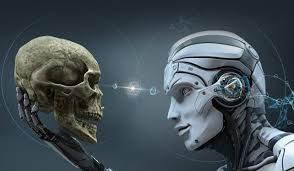
In my short story AI.GOV, I posit – no intelligence will ever surpass that of its creator. ChatGPT, and other generative AIs, have not been able to change my opinion yet. The hue & cry and pleas to form some legislation to limit or ban further development in AI has more to do with corporate politics and ‘land grabbing’ than to do with perceived threats from it.
These LLMs (Larger Language Models) appear brilliant and as has been demonstrated, can easily ace various tests, like SAT, and bar exam. I say that they better perform well on these tests because they have been trained on all this data! It is equivalent to a person studying hard, with the help of one or more tutors, for an exam and acing it. The irony is that, in spite of being trained on all of the humanity’s content, they still show dismal performance in other similar tests.
Consider the following to understand my position:
- AI is and continues to be trained (i.e., it learns from) on human generated content. As more humans use it, the quality of content they learn from will degenerate rapidly
- To have apple-to-apple comparison between AI and a human, we should compare ‘unit of intelligence’; i.e., AI running on a single machine that is not connected to the cloud computing infrastructure against one human being with both exposed to the same set of information (learning dataset)
- We humans are not sitting idle like a deer-in-a-headlight. We have already started upgrading our skills, knowledge and understanding of how to better AI that we have created
- AI, in fact, will be a catalyst and an inflection point in accelerating personalized education that will unleash human creativity at unforeseen scale
When people state their fear of AI outsmarting all of us, they are comparing one individual pitted against massive compute power with access to all of content available on Internet for the machine to learn from. This is an unfair comparison.
In one of my posts on LinkedIn, I said that until AI can traverse the journey from Information -> Knowledge -> Experience -> Intuition we do not have to worry about it taking over. It is still at the first step of ‘processing information’. Let’s see how quickly it traverses this journey.