The New Frontier – Why I Bet on AI Before It Was Cool
Somewhere between November 1994 and January 1995, I got my hands on the Netscape browser. With every click on the hyperlink of static webpages my excitement and visions of the possibilities and the future exploded.
During the course of my career, I have never bothered my family with the technical details of my job; but that day was an exception!
“This is going to revolutionize the world”, I declared as soon as I entered our apartment. The grin on my face could not be wiped off and my wife thought I had gone crazy and taken to drugs. After a few futile attempts to explain my enthusiasm about the world-wide-web, I mellowed down after a cup of tea a repeat episode of Seinfeld.
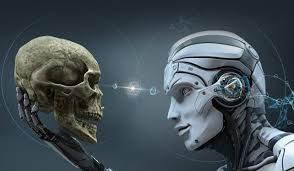
Fast forward to Jan 2018. The day I finished the online course on AI (Artificial Intelligence); I repeated the same statement with the same excitement. Luckily, this time around, my wife retorted with just ‘hmm…’. As I continue to read, listen, view and think about AI, my enthusiasm about this technology and how it can transform the world-as-we-know-it continues to grow. Age old ideas about the man-machine interface have risen from ashes in my mind as I dusted off the book that introduced me to these concepts back in mid 1980s.
There, I said it! It would be a heart-breaking news to many young entrepreneurs and techies that the underlying concepts, architecture and design of artificial intelligence has been around for more than seventy years… no, I’m not that old; it’s just these concepts. I remember creating a program to mimic ELIZA / DOCTOR, using C on UNIX and installing it as boot program on our office machine to play a prank on my co-workers. It fooled them long enough till it started repeating its response in a similar fashion that Siri does today when it can’t understand your accent.
The AI of today is much more sophisticated and powerful primarily because of big data, enormous computing power and evolution of programming languages. While we had to laboriously create the data sets, beg for compute time and write each function from scratch; these days you buy the data, assemble a program from GitHub and spin up as many VMs as you need. This provides an unprecedented flexibility to the developers to experiment and evolve their machine-learning and AI models. An inflection point is when the barrier to entry drops drastically as it becomes economically trivial for anyone to attempt it. I think AI is fast approaching that threshold.
Having worked in hi-tech industry for more than thirty years, I decided to take a break and do something non-technical for a while. But, being a techie at heart I would not do justice to my ideas if I let them simmer in my heart and soul. This is the reason I am starting a blog on the theme of ‘AI – The next frontier’. Read on, pass on and engage in conversation. Feel free to develop products or experiment. Engage me in your conversation if you feel like it, or not. My feelings won’t get hurt.